

Make your links easier to share, easier to remember, and easier to use.
Summary: Choosing the right domain name can make a big difference in how people find, remember, and interact with your business online. With so many .com options already taken, using domain names with different extensions—like .blog, .studio, or .services—can help you create shorter, clearer, and more meaningful links.
In this article, you’ll learn five smart ways to use domain names to simplify your business, improve how you share links, strengthen your branding, and create a better experience for your visitors.
Introduction
For a long time, I avoided anything that wasn’t a .com domain. It just felt… off. Like anything else was second-tier or less trustworthy.
And to be fair, .com is still the standard for a reason.
But as my site grew, I started running into a simple problem—my links were getting longer, harder to remember, and not exactly easy to share. Saying something like “just go to microbiztechhub.com/digital-drive” isn’t exactly smooth in conversation, and it’s even easier for someone to forget later.
That’s when I started looking at domain names a little differently.
One thing I realized pretty quickly is that the ending of a domain name—the part like .com, .blog, or .tools—plays a bigger role than most people think.
With so many .com names already taken, using a different extension can open up shorter, clearer, and more meaningful domain names.
Instead of trying to fit everything under one long website address, I began using short, purpose-driven domain names to point to different parts of my business—like BizTech.blog, DigitalDrive.tools, and LaunchPoint.guide.
What started as a small experiment quickly turned into a simple system that made my site easier to navigate, easier to share, and honestly… a little more fun to use.
If you’re building a business—especially as a solopreneur or running a microbusiness—this might be one of the easiest upgrades you can make.
Table of Contents
1. Create a Clear Entry Point for Your Main Website
One of the simplest ways to use a domain name is to create a clean, memorable entry point to your main website.
Most business websites end up with longer URLs that aren’t always easy to remember or share. They work just fine, but they’re not something you can casually mention in conversation and expect someone to recall later.
That’s where a shorter, more focused domain name comes in.
Instead of relying only on your full website address, you can create a simpler domain that points directly to your homepage. In many cases, that’s only possible because you’re not limited to .com—different extensions give you more room to find something that actually fits your business.
It becomes your go-to link—the one you use in conversations, profiles, and quick mentions.
In my case, I use MBTH.me as a simple way to direct people to MicroBiz TechHub. It’s easier to say, easier to type, and easier to remember.
This small change makes a bigger difference than you might expect. When someone can recall your website without having to look it up, you’ve already made their experience better before they even arrive.
2. Give Each Part of Your Business Its Own “Front Door”
As your business grows, your website usually starts doing more than one job.
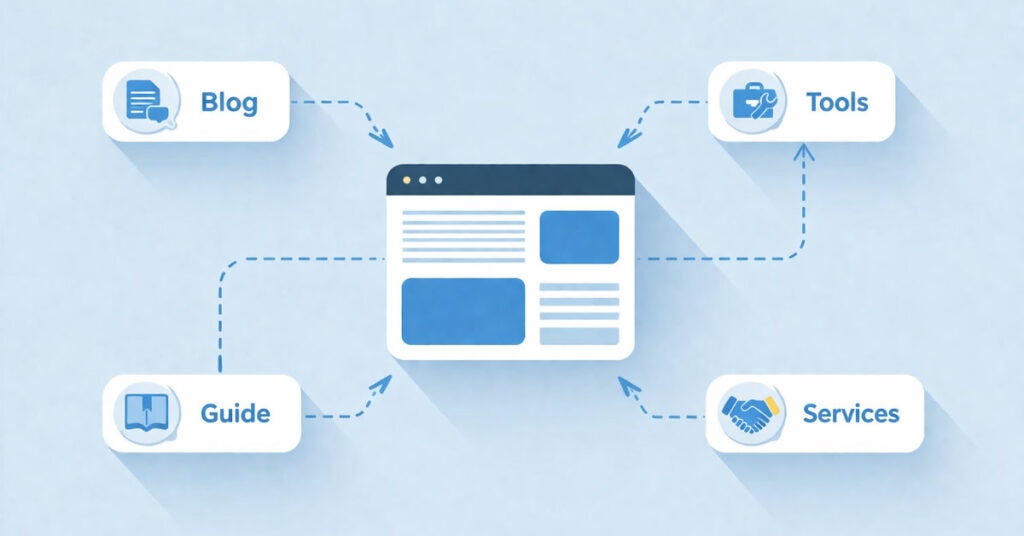
You might have a blog, a services page, a seasonal promotion, or a section for resources—each one serving a different purpose. The challenge is that all of it typically lives under one main domain, which means visitors have to find their way to what they’re looking for.
If you’ve ever thought about how your website is organized, this approach can make a big difference.
That’s where domain names can make things feel a lot more intuitive.
Instead of sending everyone to your homepage and hoping they click the right link, you can create direct entry points to specific parts of your business—what I like to think of as separate “front doors.”
If you’re thinking about how your website is structured, this is a great place to start:
In my case, I can now send people directly to BizTech Blog, LaunchPoint, and Digital Drive by using shorter, purpose-driven domain names.
Each one leads to a specific part of the site—whether it’s articles, resources, or step-by-step guidance—so visitors know exactly what to expect before they even arrive.
You’re not changing your website—you’re making it easier to access.
And when people can land exactly where they need to go, without having to think about it, the entire experience feels smoother and more intentional.
3. Make Your Links Clearer When You Share Them
Domain names don’t just make links shorter—they make them clearer.
When you share a link, you’re not just sending someone somewhere. You’re giving them a quick preview of what they’ll find on the other side.
That’s where naming really starts to matter.
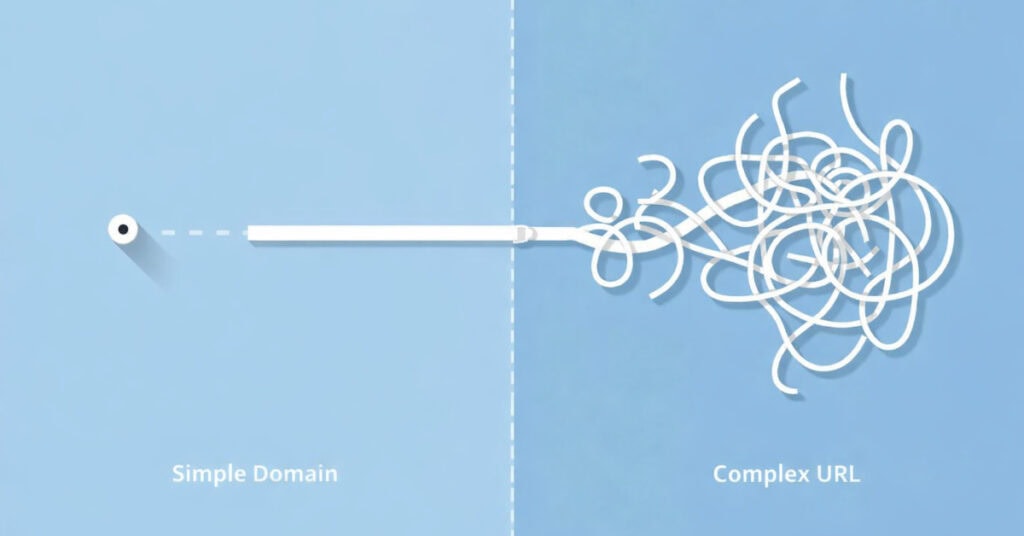
For example, a link like DigitalDrive.tools immediately suggests tools or resources. LaunchPoint.guide feels like a place to get started. Even before clicking, the visitor has a sense of what to expect.
Compare that to a longer, more generic URL. It might work perfectly, but it doesn’t communicate much on its own.
This becomes especially useful when you’re sharing links in places like:
- social media posts
- emails
- profiles
- conversations
Instead of explaining where the link goes, the domain name does that work for you.
It’s a small detail, but it makes your communication feel more intentional—and a lot easier for others to follow.
4. Strengthen Your Brand Without Complicating It
Branding doesn’t always have to be about logos, colors, or design.
It’s really about how your business shows up and is understood online.
Domain names are one of those details.
When you choose a domain that reflects what you offer, the name itself starts doing some of the work for you. And often, that flexibility comes from the extension itself. Instead of trying to squeeze your idea into whatever .com is still available, you can choose an ending that actually matches what you do.
For example:
- A designer might use something like yourname.art or yourbrand.studio
- A contractor could use yourcompany.plumbing or yourcity.services
- A consultant might use yourname.guide or yourbrand.consulting
You’re not just sending someone to a page—you’re giving them context.
If you want to take a deeper look at how your brand comes together online, check out:
👉 5 Steps to Build Your Brand: Logo, Website, and Online Presence
And here’s the part that often gets overlooked: a domain name like this doesn’t have to be secondary to a “main” website. In many cases, it can be your main website.
With so many traditional .com names already taken, trying to find something short, clear, and memorable can be frustrating. Using a different extension gives you another path—one where your domain can actually match your business more naturally.
Whether you use them as entry points to different sections or as your primary domain, the goal is the same: make your business easier to understand at a glance.
And that perception matters.
When your links feel clear and consistent, your business feels more polished—not because you’ve added more, but because you’ve made what’s already there easier to understand.
5. Improve Speed and User Experience with Smart Redirects
Once you start using domain names, how you send people to the right place matters more than you might expect.
At first, I was using basic forwarding through Hover, the service where I purchased my domains. It worked, but it added an extra step along the way. Instead of handling it there, I set things up through Cloudflare.
If you’re not familiar with it, Cloudflare is a service that helps route visitors to your website more efficiently. It can also add a layer of security and performance behind the scenes—but you don’t need to worry about the technical details to benefit from it.
A simple way to think about it is this: it’s like asking someone for directions, getting told where to go, and then driving there yourself. It works—but it takes an extra moment or two to get there. Using Cloudflare is more like hopping in a cab and being taken straight to your destination.
The difference is small, but noticeable. Visitors get where they’re going a little faster, and everything feels smoother—which is exactly the goal when you’re trying to make your business easier to access and easier to use.
💡 Tech Tip:
If you’re using domain names like this, consider setting them up through Cloudflare (or a similar service) instead of relying on basic forwarding from your domain provider. It’s a simple upgrade that improves both performance and control.
Key Takeaways
- Choosing the right domain name can make your business easier to find, share, and remember
- Using different extensions (like .blog, .studio, or .services) can open up better, more meaningful domain names
- Domain names can act as direct entry points to different parts of your business
- Clear, purpose-driven links help visitors understand where they’re going before they click
- A simple setup upgrade—like using Cloudflare—can make your links faster and smoother
Final Thoughts
For a long time, I thought anything outside of .com was a compromise. Now I see it differently.
Using domain names with the right extensions isn’t about settling—it’s about choosing something that fits your business better. It gives you the flexibility to create cleaner, more memorable links and guide people exactly where they need to go.
In a way, it’s like giving each part of your business its own front door. And when everything is easier to find, easier to understand, and easier to access, your business feels more polished without adding complexity.
If you’re building your own business, this is one of those small changes that can make a bigger difference than you might expect.
Have you tried using different domain names for your business? I’d love to hear how you’re using them—or if you’re thinking about it.