

A step-by-step roadmap to help you plan, launch, and grow your microbusiness with confidence.
Summary: Starting a microbusiness can feel overwhelming, but the right plan makes the process much easier. This guide walks you through the essential steps to start your microbusiness, including business planning, branding, finances, operations, marketing, and launch preparation. Whether you’re building a side hustle or a full-time business, you’ll learn how to create a strong foundation and move forward with confidence.
Explore This Guide
Launching a microbusiness involves a lot of moving parts, but breaking the process into clear steps makes it much easier to manage. This guide walks you through each major stage of building your business, from setting up the basics to preparing for launch day.
Table of Contents
Introduction
Starting a microbusiness is an exciting step toward building something of your own. Whether you’re launching a side hustle, turning a passion into income, or pursuing a long-term business idea, getting started can feel both exciting and overwhelming at the same time.
The good news is that you don’t need a massive budget, a large team, or a perfect plan to begin. What you do need is a clear path forward and a solid understanding of the foundational steps that help turn an idea into a real business.
This guide was created to help you start your microbusiness with confidence. Inside, you’ll work through the essential building blocks of launching a business, including legal setup, finances, business planning, branding, marketing, operations, and launch preparation.
As you move through the guide, you’ll also find links to other LaunchPoint resources that explore individual topics in greater depth. Think of this article as your big-picture roadmap: enough information to understand what needs to happen and where to go when you’re ready to dig deeper.
So, let’s start turning your microbusiness idea into something real—one step at a time.
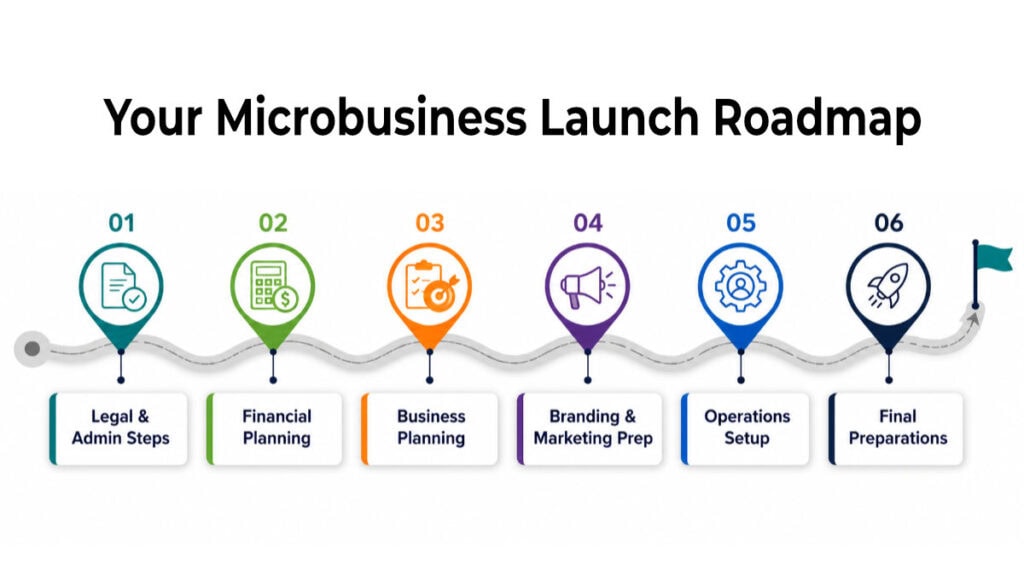
1. Legal and Administrative Steps
Taking care of the legal and administrative side of your microbusiness may not be the most exciting part of the journey, but it’s one of the most important. Getting these foundational pieces in place early helps you stay organized, protect your business, and avoid unnecessary problems later.
The good news is that most of these steps are more manageable than they first appear.
Register Your Business Name
Choosing a business name is one of the first major milestones in launching your microbusiness. Your name becomes part of your brand identity, so look for something memorable, professional, and connected to what you want your business to represent.
Before settling on a name, make sure it’s available. Search online, check relevant social platforms, and review your local business registration databases. It’s also a good time to check whether a matching or suitable domain name is available, even if you aren’t ready to build a website yet.
Once you’ve chosen your name, determine whether it needs to be formally registered. Depending on your location and business structure, this may involve filing a DBA, or Doing Business As, or an FBN, or Fictitious Business Name.
Requirements vary by city, county, and state, so check the rules where you operate.
Pro Tip: Don’t get stuck trying to find the “perfect” business name. A simple name can become a strong brand through consistency and a great customer experience.
Choose a Business Structure
Your business structure affects how your microbusiness operates legally and financially. It can influence taxes, paperwork, liability protection, and how you manage the business over time.
A sole proprietorship is often the simplest option for someone operating alone. It gives you complete control, but it generally does not create legal separation between you and the business.
A partnership allows two or more people to share ownership. If you take this route, a written agreement that clearly defines responsibilities, decision-making, and profit sharing can help prevent problems later.
A limited liability company, or LLC, is popular with many small business owners because it can provide liability protection while maintaining relatively flexible management and tax options.
A corporation provides strong separation between the business and its owners but usually comes with more administrative and regulatory requirements. For many new microbusinesses, it may be more complexity than necessary.
You don’t have to make this decision alone. Business formation services can simplify the paperwork, while an attorney or tax professional can help you understand how different structures apply to your circumstances.
The goal isn’t to choose the most impressive structure. It’s to choose the one that makes sense for the business you’re building.
Obtain Necessary Licenses and Permits
Depending on your industry and location, you may need licenses or permits before you can legally operate.
These might include a general business license, seller’s permit, professional license, health permit, home occupation permit, or industry-specific registration.
Start with your city, county, and state government websites, then check for federal requirements if you operate in a regulated industry.
Once everything is in place, create a simple system for tracking renewal dates. A recurring calendar reminder is often enough to keep an important license from expiring unnoticed.
Set Up a Business Bank Account
Separating your personal and business finances is one of the smartest early moves you can make. A dedicated business account makes it easier to track expenses, manage taxes, monitor cash flow, and maintain cleaner records.
When comparing banks or credit unions, look at the features that matter to the way you operate: fees, minimum balances, online banking, transfers, ATM access, payment integrations, and small business support.
You don’t necessarily need the account with the most features. You need one that is affordable, convenient, and easy to manage.
As your business grows, connecting that account to accounting software can save significant time. These tools, which we’ll explore more in the next section, can help automate expense tracking, invoicing, and financial reporting.
With your basic legal and administrative foundation in place, you’re ready to look more closely at the numbers behind your business.
2. Financial Planning
Strong financial planning helps your microbusiness stay organized, sustainable, and prepared for growth. While finances can feel intimidating at first, you don’t need to be an accountant to build a solid foundation.
The goal in the beginning isn’t perfection—it’s clarity.
Create a Budget and Forecast
Start by estimating what it will cost to get your business ready for launch. Depending on what you’re building, startup expenses may include equipment, software, inventory, website costs, branding, marketing, permits, insurance, or professional services.
You may not know every exact amount yet, and that’s okay. A reasonable estimate gives you a much clearer picture of what you need.
It can also help to separate expenses into two groups: what you need before launch and what can wait until later. That simple distinction can keep you from spending money on tools or services before you truly need them.
Next, identify your ongoing expenses. These may include software subscriptions, advertising, phone service, inventory replenishment, shipping, insurance, payment-processing fees, or workspace costs.
Once you understand your costs, create a simple forecast of what you expect the business to earn and spend. Start with reasonable assumptions about the number of customers you might serve, your average sale, and your recurring expenses.
Your forecast will change as you learn. That’s expected. Its purpose is to give you a starting point for making better decisions.
Tools such as Wave, QuickBooks, and Xero can help you organize transactions, send invoices, monitor expenses, and generate financial reports. Choose something appropriate for the size of your business today. You can always move to a more advanced system later.
Tech Tip: Start using one financial system early, even if you only have a handful of transactions. Building the habit now is much easier than reconstructing months of activity later.
Understand Your Funding Options
Not every business needs outside funding.
Many microbusiness owners begin by self-funding, using savings or income from another job and then reinvesting some of the business’s early earnings. This can allow you to maintain control and avoid debt, although you may need to grow more gradually.
Small business loans can help pay for equipment, inventory, or startup expenses, but make sure you understand the interest rate, repayment schedule, fees, and any personal guarantees before borrowing.
Crowdfunding can help raise money while also testing whether people are interested in a product or idea. Successful campaigns, however, usually require strong promotion and a clear plan for fulfilling what you promise.
Some businesses also pursue investors, usually in exchange for partial ownership. That may make sense for a business designed to grow quickly, but many microbusinesses can become successful without outside investors.
Pro Tip: Don’t assume you need a large amount of money to start. Many successful microbusinesses begin with a focused offer, a small group of customers, and only the tools needed to deliver a great experience.
Set Financial Goals
Financial goals give your business direction and help you measure progress.
Early goals might include making your first sale, covering monthly expenses, recovering startup costs, reaching a revenue target, or becoming consistently profitable.
Over time, your goals may shift toward increasing your income, expanding services, hiring help, launching new products, or building a larger financial cushion.
Review your numbers regularly. You may want to track revenue, expenses, cash flow, profit, average sale value, and outstanding invoices.
A short monthly financial review may be enough in the beginning. What matters is developing the habit of looking at your numbers instead of waiting until tax season or until something goes wrong.
Helpful Financial Planning Tools
The best financial tool is the one you’ll actually use.
Wave can be a good starting point for small businesses looking for straightforward accounting and invoicing.
QuickBooks offers a broader set of accounting, expense-tracking, invoicing, and reporting features.
Xero provides cloud-based accounting and financial-management tools.
LivePlan combines business planning with forecasting and performance tracking.
You don’t need all of them. Compare the features, cost, and ease of use, then choose the one that fits how you operate.
For a deeper look at managing income, expenses, cash flow, and financial habits, read 5 Smart Ways to Manage Your Business Finances.
With a clearer understanding of your finances, you can begin bringing the rest of your business idea together.
3. Business Planning
A business plan helps you organize your ideas, understand who you want to serve, and make more thoughtful decisions before investing too much time or money.
It doesn’t have to be a long, formal document. For many microbusiness owners, a simple plan that clearly explains the business, the customer, and the path forward is enough.

Craft a Simple Business Plan
Your business plan is a practical roadmap for how your business will operate and grow.
At a basic level, it should help you answer a few important questions:
- What problem does your business solve?
- Who does it solve that problem for?
- What will you offer?
- How will customers find and purchase from you?
- What will it cost to operate?
- How will the business make money?
Your answers may change as you research the market and talk with potential customers. That’s part of the process. A business plan should become more useful as you learn.
Unless you’re applying for financing or presenting the plan to investors, don’t get caught up trying to make it sound overly formal. Build something you can actually use to set priorities, evaluate ideas, identify challenges, and decide what to work on next.
Pro Tip: Don’t wait until every detail is settled. Start with what you know, identify what still needs research, and improve the plan as your business develops.
For a complete step-by-step walkthrough, read 7 Steps to Craft Your Simple Business Plan.
Define Your Target Market
Trying to market to everyone usually makes it harder to connect with anyone.
Defining your target market helps you focus your products, pricing, messaging, and marketing on the people most likely to need what you offer.
Start by thinking about the characteristics that actually influence why someone would buy from you. Depending on your business, that might include location, age or life stage, occupation, industry, budget, interests, business size, challenges, or goals.
Then go deeper than demographics.
What problem are your customers trying to solve? What frustrates them about their current options? What matters most when they choose a provider? What might prevent them from buying?
Those answers can shape everything from your offer to the way you communicate it.
A customer persona can help bring this information together. Rather than describing an entire market, a persona represents a typical ideal customer and summarizes their needs, goals, motivations, and challenges.
Use the Customer Persona Blueprint to organize what you know and identify what you still need to learn.
Conduct Market Research
Market research helps you replace assumptions with useful information.
Start by looking at the broader environment around your business. Learn about customer demand, pricing, industry trends, regulations, seasonal patterns, and changes that could affect the way people buy.
Then study your competitors. Look at what they offer, how they position themselves, their prices, customer reviews, and where they appear strongest or weakest.
Customer reviews can be particularly useful. Positive reviews tell you what people value. Negative reviews can reveal frustrations or gaps your business might address.
Most importantly, talk to potential customers. Informal conversations, interviews, short surveys, samples, test services, and early offers can teach you things that online research never will.
When possible, take the next step and test the idea on a small scale. Offer the service to a few people, launch a basic landing page, take preorders, or sell a limited version of the product.
A small real-world test tells you what customers actually do—not just what they say they might do.
Tech Tip: Keep your research organized in one place. A spreadsheet, digital notebook, or project board can help you track competitor information, customer feedback, useful links, and unanswered questions.
Bring the Plan Together
Your business plan, market research, and customer insights should support one another.
The plan explains what you intend to build. Research helps determine whether the opportunity is realistic. Customer feedback helps shape the offer around the people you want to serve.
You don’t need every answer before moving forward. You need enough information to make the next decision with greater confidence.
Once you understand what you’re offering and who you’re building it for, you can start shaping how customers will see and experience the business.
4. Branding and Marketing Prep
Branding and marketing are closely connected, but they serve different purposes. Your brand helps people understand who you are and what they can expect from you. Marketing helps put that message in front of the right people.
You don’t need an expensive logo, a huge social media following, or a complicated campaign to start. Focus on creating a clear, consistent presence and a practical way to reach your first customers.
Create Your Basic Branding Elements
Your brand is more than your logo. It’s the overall impression people develop every time they interact with your business.
Start by thinking about what you want the business to represent. What makes you different? What kind of experience should customers have? How should the business sound when it communicates?
Those answers help shape your visual identity, messaging, and customer experience.
Choose a simple set of colors and fonts you can use consistently. A primary color, one or two supporting colors, and a few readable fonts may be all you need.
Your logo can be simple, too. A clean wordmark or basic symbol may work perfectly well for a new microbusiness. Tools like Canva can help you create one yourself, or you can hire a designer if your budget allows.
Pro Tip: Don’t let your logo become the thing that keeps you from launching. A simple logo used consistently is more valuable than spending months trying to create the perfect one.
Finally, develop a few core pieces of messaging: what your business does, the problem you solve, the value you provide, and perhaps a simple tagline.
Try to describe your business in language your customers naturally understand. Clear is usually better than clever.
For a deeper walkthrough, explore 5 Steps to Build Your Brand: Logo, Website, and Online Presence.
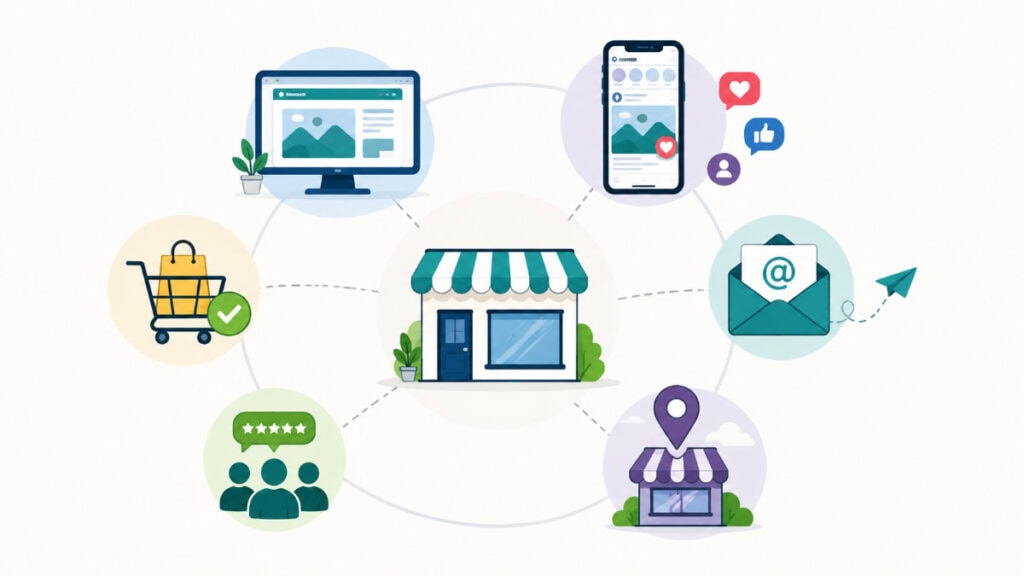
Establish Your Online Presence
Give customers a reliable way to find and learn about you online.
For many businesses, a website becomes the central home for that presence. A basic site may only need to explain what you offer, provide essential business information, and give visitors a clear next step such as buying, booking, calling, or requesting a quote.
You can expand it later.
Social media can also be useful, but you don’t need to be everywhere. Think back to your target-market research. Where do your customers actually spend their time?
A visually focused business may benefit from Instagram or Pinterest. A professional service might find value in LinkedIn. A local business may get more from a strong Google Business Profile than from maintaining several social accounts.
Start where you have a reason to be—not because you think every business is supposed to be there.
Wherever your business appears, keep the basics consistent: your name, logo, description, contact information, website, hours, and location when applicable.
Plan Your Initial Marketing Strategy
Your first marketing goal is simple: help the right people discover your business and give them a reason to take the next step.
Depending on your business, you might use referrals, local networking, email, search engines, social media, content, online marketplaces, community events, partnerships, or paid advertising.
You don’t need all of them.
Choose a few channels that fit your customers, your budget, and the amount of time you can realistically devote to marketing.
And don’t overlook the people you already know. Friends, former coworkers, professional contacts, and community relationships can help make introductions and spread the word.
Whatever channel you use, give people a clear next step. Visit your website. Request a quote. Schedule a consultation. Make a purchase. Join your email list.
A potential customer shouldn’t have to figure out how to become a customer.
Then pay attention to what’s working. Track a few useful measures such as inquiries, website visits, appointments, sales, email signups, or referrals. And ask new customers how they found you.
Tech Tip: Before adding another marketing platform or tool, ask what problem it will solve. A simple website and one or two effective customer-acquisition channels can take a new microbusiness a long way.
Build as You Grow
Your first brand and marketing plan won’t be your last.
Once you begin interacting with customers, you’ll learn which messages resonate, which channels bring in leads, and what customers value most about your business.
Use that information to refine your approach.
For now, the goal is simpler: create a business people can recognize, understand, and find.
Next, you need to make sure you can actually deliver what you’ve promised.
5. Operations Setup
Operations are the systems and routines that help your business function day to day.
For a microbusiness, they don’t need to be complicated. A workable space, a few reliable processes, and the right technology can go a long way.
Establish Your Workspace
Your workspace should fit the kind of work you actually do.
That might mean a home office, workshop, vehicle, shared space, commercial kitchen, or simply a laptop you take with you.
Think about what you really need: reliable internet, room for inventory, privacy for calls, storage for tools, a packing area, or a professional place to meet customers.
Start with what your business requires today rather than what you imagine you might need years from now.
Pro Tip: Before buying a lot of furniture, equipment, or storage, work in the space for a while. You may discover that your real needs are different from what you expected.
Organize Your Logistics
If you provide a service, logistics might simply mean managing appointments, travel, and supplies.
If you sell products, you’ll need a way to track inventory, orders, and fulfillment.
Start with a simple system that tells you what you have, what has been sold or used, and what needs to be reordered. A spreadsheet may be enough at first.
If you ship products, walk through the process from receiving an order to delivering it. Testing those steps before launch can uncover small problems while they’re still easy to fix.
As the business grows, you may eventually outsource fulfillment, bookkeeping, administrative work, or other repetitive tasks. You don’t need to do that from day one. Just stay alert for the point where doing everything yourself begins getting in the way of more valuable work.
Set Up Your Essential Technology
Technology should make the business simpler—not give you more systems to manage.
Think about the jobs you need technology to perform. You may need tools for accounting, customer management, scheduling, project tracking, payments, e-commerce, communication, inventory, or file storage.
You probably don’t need a separate platform for every category.
Start with the tools required to operate reliably and add more when a real need emerges. A spreadsheet may be enough before you need a CRM. A basic scheduling tool may work before you need a larger management platform.
Tech Tip: When comparing software, look beyond the monthly price. Consider ease of use, integrations, and whether you can export your data if you decide to change platforms later.
For more help, explore Budget-Friendly Tools to Launch Your Microbusiness and 5 Essential Tech Tools for Your Solopreneur Success.
Create Simple Processes
Even if you’re the only person in the business, simple processes can save time and prevent mistakes.
Think about tasks you’ll repeat: responding to inquiries, creating estimates, onboarding customers, completing orders, sending invoices, following up after a sale, or reordering supplies.
You don’t need a formal operations manual. A checklist, template, or short procedure may be enough.
And if you eventually hire help or automate parts of the business, those simple processes will make the transition much easier.
Your operating system will evolve as you learn. Build enough structure to stay organized, but leave yourself room to improve it.
With those basic systems in place, you’re getting very close to launch.
6. Final Preparations
You’ve laid the groundwork, planned your finances, learned about your customers, created your brand, and set up the basic systems needed to operate.
Now it’s time to test what you’ve built before putting it in front of a wider audience.
Test Your Product or Service
You don’t have to wait until everything is perfect before letting someone try your business.
A small test can help you identify things you might never notice on your own.
Depending on your business, that could mean a soft launch, a few early orders, product samples, a beta test, or offering your service to a small group.
Try to test the entire experience, not just the product itself.
Can customers easily find you? Understand the offer? Contact you? Book or buy? Pay? Receive confirmation? Get help?
If you sell online, place a test order yourself. If customers book appointments, go through the scheduling process. Experience the business the way a customer will.
When asking for feedback, go beyond “Did you like it?”
Ask what was confusing, what was difficult, what felt missing, and what could make the experience better.
Pro Tip: A soft launch doesn’t need to be a big event. Starting quietly with a handful of customers can give you valuable experience before actively promoting the business.
Set Up Customer Service Channels
Make it easy for customers to reach you when they need help.
You might offer email, phone, text, a contact form, live chat, or social messaging. You don’t need all of them. One or two channels you reliably monitor are better than five you struggle to keep up with.
Think ahead about common questions involving pricing, scheduling, shipping, cancellations, returns, payment methods, service areas, or how your product works.
An FAQ can answer many of these questions before customers need to contact you. Reusable email templates can also save time while still allowing you to personalize your response.
And have a basic plan for when something goes wrong. Problems happen. Clear policies and a calm, helpful response can go a long way toward maintaining trust.
Plan Your Launch
Your launch is an important milestone, but it doesn’t have to be a huge event.
For a microbusiness, a successful launch may simply mean that you’re ready to serve customers and people know how to find you.
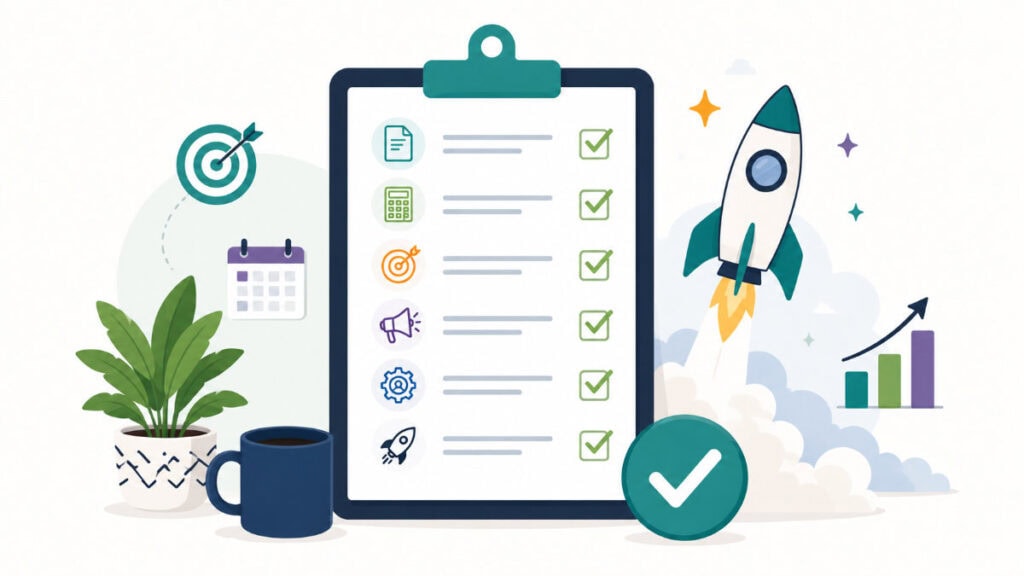
Before launch, make sure the essentials are ready: your product or service, pricing, website and contact information, payment process, required licenses, customer-service channels, marketing materials, fulfillment process, and bookkeeping system.
Then start telling people you’re open.
Use the marketing channels you chose earlier and communicate three things clearly:
What you offer. Who it’s for. What they should do next.
You don’t need enormous buzz. You need the right people to understand how you can help them.
Launch, Learn, and Keep Moving
Launching isn’t the finish line. It’s the point where planning starts turning into real experience.
You’ll adjust prices, improve processes, discover better ways to market, learn more about your customers, and change things you once thought were settled.
That doesn’t mean your original plan failed. It means your business is developing.
Tech Tip: After launch, keep a simple list of repeated problems, tasks, and customer questions. These often reveal the best opportunities for better processes, automation, or technology.
For a structured path through the final stretch, use Your 30-Day Microbusiness Launch Guide and the Microbusiness Launch Checklist.
The important thing is to keep moving. You don’t need every system perfected or every future decision figured out.
You need a solid foundation, a business ready to serve its first customers, and the willingness to learn as you go.
And at this point, you’re ready to launch.
Key Takeaways
Starting a microbusiness involves a lot of decisions, but you don’t have to make all of them at once.
- Build the foundation first. Take care of your business name, structure, licenses, and finances.
- Know your numbers. Understand your costs, build a simple budget and forecast, and monitor your financial progress.
- Create a practical plan. Know what you’re offering, who you want to serve, and how the business will make money.
- Understand your customers. Research your market and talk to real people before investing too heavily in assumptions.
- Make your business easy to understand and find. Build a consistent brand and focus your marketing on channels that fit your customers.
- Keep operations simple. Build basic processes and use technology where it genuinely makes the business easier to run.
- Test before you launch. Let real people experience the business and fix problems while they’re still small.
- Launch and keep learning. Pay attention to your customers, your numbers, and what happens in the real world, then keep improving.
Final Thoughts
Starting a microbusiness can seem like a huge undertaking when you look at everything that needs to happen at once.
But you’re not actually doing everything at once.
You’re choosing a name. Then you’re figuring out your finances. You’re learning about your customers, building your brand, setting up the tools you need, and preparing to serve your first customer.
One step at a time, an idea starts becoming a business.
That’s what LaunchPoint is here to help you do.
This guide gives you the big-picture roadmap, while the other LaunchPoint guides and resources are there when you’re ready to dig deeper into a particular step.
And launching doesn’t mean you have everything figured out. Some of your most useful lessons will come after you start—when you talk with customers, make your first sales, discover what works, and realize what needs to change.
So don’t wait for everything to be perfect.
Build a solid foundation. Start small. Keep learning. And keep moving forward.
Your microbusiness starts with the next step.