
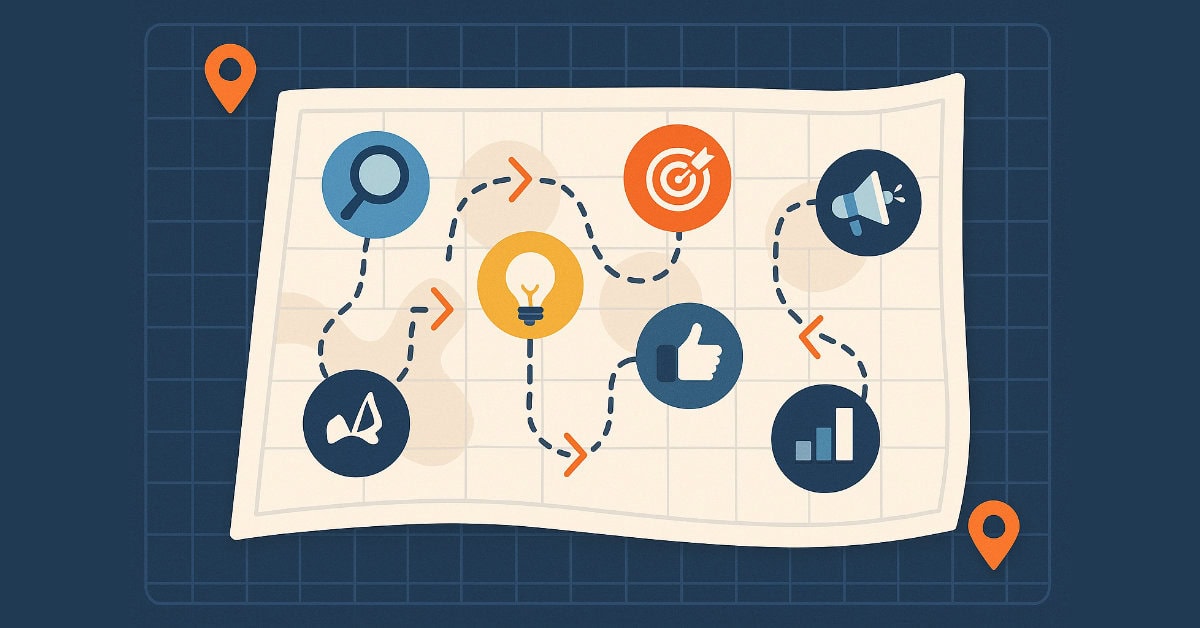
Craft a winning marketing strategy with confidence.
Summary: Want a simpler way to build your marketing strategy? The Marketing Map breaks it down into manageable steps—so you can stay focused, connect with the right audience, and grow your microbusiness with clarity and confidence. Whether you’re just starting out or fine-tuning your approach, this guide walks you through each part of the map with practical tips and real-world examples designed for solopreneurs.
Introduction
When you have a clear map, marketing feels a lot less stressful—and a lot more purposeful. That’s exactly what the Marketing Map is designed to do.
Instead of trying to do everything at once, the map helps you focus on what really matters. You’ll be able to organize your ideas, set meaningful goals, and make smarter decisions—whether you’re launching something new or fine-tuning what you already have.
In this guide, we’ll walk through each section of the Marketing Map and show you how to use it to bring your strategy to life—one step at a time.
1. Get to Know Your Audience (Target Audience)
Before you can create effective marketing, you have to know who you’re creating it for. Getting to know your audience means understanding the real people behind your ideal customer profile—what they care about, what they’re struggling with, and what kind of messaging actually speaks to them.
It’s more than just demographics. It’s about seeing the world through their eyes. When you do, you’ll be able to create marketing that connects in a more personal and powerful way.
Key Areas to Define:
- Demographics: What is the age, gender, income, location, and occupation of your ideal customer?
- Interests and behaviors: What are their interests, values, lifestyle habits, and online behaviors?
- Pain points: What are they struggling with, and how can you help?
How to Find This Info: You don’t need a large research budget to learn more about your target audience. Free tools like Google Trends, Facebook Audience Insights, or even browsing Reddit threads can give you a surprising amount of insight into what your current and future customers care about.
Another way is to just simply ask them. Send a short survey to your email list. Strike up a conversation in person or on social media. You’d be amazed at what you can learn by just communicating directly with them.
Real-World Example: Suppose you run a home-based bookkeeping service. Your ideal audience might be other microbusiness owners aged 30–55 who are struggling to keep up with their bookkeeping. They care most about accuracy, affordability, and simplicity.
Rather than trying to appeal to every small business owner out there, you zero in on solo professionals who would rather spend their time selling and growing their business than sitting in the office doing books. By tailoring your message to their needs, your marketing becomes more focused and much more effective.
Pro Tip: Don’t try to appeal to everyone—narrow your focus and build strong connections with your ideal clients. A narrow target helps you craft clearer messages and connect with the people who are most likely to become loyal customers.
2. Set the Right Goals (Marketing Goals)
Now that you know who you’re trying to reach, it’s time to get clear about what you want your marketing to actually do. It’s easy to say “I want more customers,” but goals like that don’t give you direction. Specific, measurable goals help you focus your time and energy.
Start by thinking about what success looks like in your business—then work backward to set marketing goals that support it.
Think SMART:
- Specific – What exactly do you want to achieve?
- Measurable – Can you track progress?
- Achievable – Is it realistic with your resources?
- Relevant – Does it align with your bigger business goals?
- Time-bound – When do you want to reach this goal?
Example Goals:
- Grow your email list by 100 subscribers in 60 days
- Get 10 new leads from your website each month
- Boost Instagram engagement by 20% over the next quarter
Micro vs. Macro Goals: Big-picture goals are important, but smaller milestones help you get there. Think of macro goals as the destination and micro goals as the mile markers. For instance, “build brand awareness” could start with the micro-goal of posting consistently on social media for 30 days.
Tool Tip: A simple Trello board, Notion database, or Google Sheet can help you track your goals, break them into tasks, and see your progress clearly.
3. Shape Your Message (Key Message)
At the heart of every strong marketing plan is a message that sticks. This isn’t just a slogan—it’s the core of how you talk about your business. A great message quickly communicates what you do, who you help, and why it matters.
Start by thinking about your business from your customer’s perspective. What problem are they facing? How do you solve it? Why should they choose you?
Three things to define:
- What you do – Be clear and straightforward
- Who you help – Focus on your ideal audience
- Why it matters – Highlight the benefit or impact
Real-World Example: A business coach might say, “I help women solopreneurs streamline their services so they can earn more and work less.” It’s simple, targeted, and outcome-focused.
Pro Tip: Keep your message short and sticky. You’ll use it on your website, social media bios, elevator pitches—everywhere.
4. Choose Your Channels (Marketing Channels)
Now that you’ve shaped your message, it’s time to figure out where to share it. With so many marketing channels out there, it’s tempting to try everything. But spreading yourself too thin can lead to burnout—and inconsistent results.
Focus on the places where your ideal audience already spends time. Then choose 1–2 channels you can show up on consistently. That’s where your message will have the biggest impact.
Popular marketing channels include:
- Social media (Facebook, Instagram, LinkedIn, etc.)
- Email marketing
- Your website or blog
- In-person networking or local events
- Online communities or forums
Pro Tip: Start small. Once you’re consistent, you can test and expand.
5. Plan Your Content (Content Strategy)
Content is how you build trust, show your expertise, and stay top-of-mind with your audience. But without a plan, it’s easy to fall into the cycle of posting randomly or not at all.
Your content strategy doesn’t have to be complicated. The goal is to share useful, relevant, or engaging information that meets your audience where they are.
Content ideas:
- How-to posts or tutorials
- Customer stories or testimonials
- Behind-the-scenes updates
- Seasonal tips or industry trends
Tool Tip: Use a simple calendar to plan content by week or month. Tools like Trello, Notion, or even Google Sheets work great.
6. Set Your Budget (Marketing Budget)
Marketing doesn’t have to cost a fortune—but you still need a plan for how you’ll spend your money and time. A budget keeps you from overspending, and it helps you prioritize what’s worth investing in.
Whether you’re setting aside $50 or $500, budgeting helps you make intentional choices that support your goals.
Questions to consider:
- What’s your monthly marketing budget?
- Will you spend money on ads, software, or freelancers?
- How much time can you realistically dedicate each week?
Pro Tip: Track how long marketing tasks take. That way, you’ll know when it makes sense to outsource and where you get the most bang for your buck.
7. Track Your Progress (Analytics & Improvement)
Marketing isn’t one-and-done. It’s a process of testing, learning, and improving over time. The good news? You don’t need to be a data expert to know what’s working.
Start by looking at a few simple metrics and checking in regularly. That way, you can make small tweaks that lead to better results.
Easy things to track:
- Website traffic (Google Analytics)
- Social media engagement
- Email open rates and clicks
- Leads, inquiries, or sales
Tool Tip: If you use WordPress, the free Site Kit by Google plugin shows traffic, search performance, and more right in your dashboard.
Pro Tip: Check in monthly. Use what you learn to adjust your strategy so your marketing keeps getting better over time.
Key Takeaways
- The Marketing Map simplifies your strategy so you can stay focused.
- Know your audience, shape your message, and share it where it counts.
- Small, consistent steps make a big difference.
- You don’t need to do everything—just do what matters.
Final Thoughts
Marketing doesn’t have to feel scattered or overwhelming. When you take time to map things out—who you’re talking to, what you want to say, and where to say it—everything starts to click.
The Marketing Map gives you a simple framework to work from, whether you’re just getting started or refining what you’ve already built. It’s not about being perfect—it’s about being intentional.
Start small. Focus on one section at a time. Your clarity will grow with every step, and so will your confidence.
Ready to put your Marketing Map into action? Leave a comment below to share your biggest takeaway—or your favorite part of the map. And before you go, join the MicroBiz TechHub community for more practical tools and insights to help you grow your business with clarity and confidence.
Download the Marketing Map template here or explore more resources in the Digital Drive section.